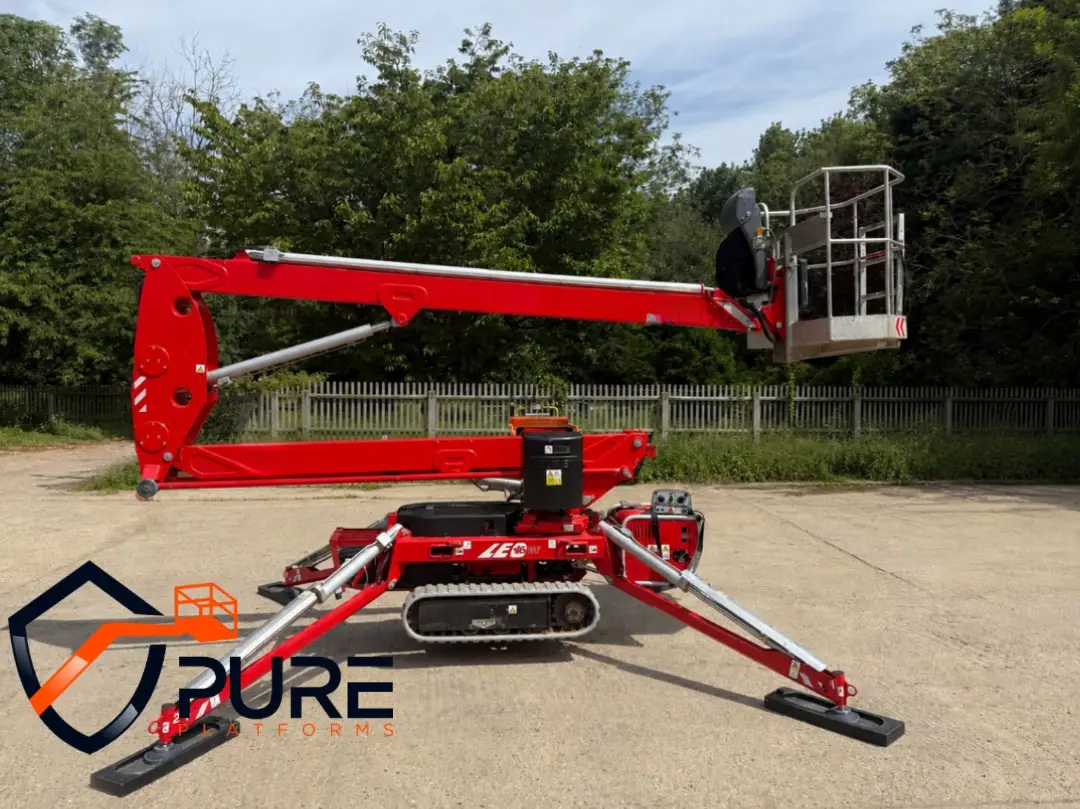
A used tracked spiderlift can be a very sensible purchase when the job demands compact access, low ground pressure and serious reach. But used tracked spiderlifts for sale are not all equal. Two machines with the same working height can have very different outreach, transport weight, basket capacity, power options and service history – all of which affect whether the machine earns its keep on your sites.
For arborists, roofers, facilities teams, maintenance contractors and hire fleets, the right pre-owned spiderlift can open up difficult work areas without committing to the cost of a new machine. The wrong one can become an expensive compromise: too wide for the gate, too heavy for the carrier, short of reach where it matters, or overdue attention before it is ready for productive work.
Start With the Site, Not the Sticker Price
The first question is not, “What is the cheapest machine available?” It is, “What must this machine do that our current access equipment cannot?” A tracked spiderlift is built for places where conventional booms struggle: narrow entrances, soft or sensitive ground, internal floor slabs with weight limits, landscaped areas and uneven terrain.
Measure the access route properly. That includes the narrowest gate, doorway, side passage, turn and overhead obstruction, rather than relying on an estimate from memory. A spiderlift may fold down to an impressively narrow transport width, but mirrors, protruding branches, gate furniture and awkward approaches can still dictate the maximum practical size.
Then consider the working envelope. Working height gets attention because it is easy to compare, but horizontal outreach is often the deciding figure. A 20-metre machine with the required outreach at your normal working height may outperform a taller machine that has to be positioned closer to the building. Check the basket capacity at different points in the envelope as well. Some machines have reduced capacity or restricted outreach when carrying two operatives and tools.
Ground conditions matter just as much. Tracks spread the machine’s weight more effectively than wheels, but they do not remove the need for a proper assessment of ground bearing capacity. Outriggers place concentrated loads into the surface. On lawns, paving, suspended slabs, basements or unknown ground, the correct spreader pads and a suitable set-up plan are part of the job, not an afterthought.
What to Check on Used Tracked Spiderlifts for Sale
A clean-looking machine is not automatically a well-maintained one. Cosmetic condition can be useful, particularly where it reflects careful ownership, but inspection should focus on the components that determine safety, reliability and future cost.
Hours Tell Part of the Story
Operating hours are useful, but they need context. A low-hours machine that has stood unused for long periods may need more attention than a higher-hours machine with a consistent maintenance record. Ask how the spiderlift has been used. Arboricultural work, hire work, glazing, industrial maintenance and domestic property access can all place different demands on tracks, booms, baskets and controls.
Look for evidence of planned servicing, inspection records and any repairs already carried out. A documented history gives a clearer picture of ownership than a display reading alone. It also helps identify recurring faults, replacement intervals and whether the machine has been maintained by people who understand specialist access equipment.
Inspect the Structure and Moving Parts
The boom should extend, articulate and retract smoothly, without unusual noise, hesitation or hydraulic drift. Check pins, bushes and pivot areas for excessive play. Look closely at welds, boom sections and the chassis for damage, corrosion, repairs or signs of impact.
Hydraulic hoses, fittings and cylinders deserve a close inspection. Small leaks can be manageable, but damp areas around rams, hoses rubbing against the structure, or damaged protective sleeves should not be ignored. Hydraulic issues tend to become more disruptive once a machine is working daily.
The basket is a working area, not just a platform at the end of the boom. Inspect the gate, guardrails, floor, anchorage points, emergency lowering arrangements and basket controls. Test every movement from both the ground and basket stations where appropriate. Controls should be clear, responsive and free from intermittent faults.
Tracks, Undercarriage and Outriggers
Tracks are a major wear item. Check for cuts, missing rubber, uneven wear, damaged drive sprockets and signs that the tracks have been run too loose or too tight. Examine rollers and idlers, and listen for rough operation during travel. Replacing undercarriage components can materially change the real cost of a supposedly low-priced machine.
Outriggers should deploy evenly and lock the machine into a stable position. Watch the auto-levelling or stabilisation function operate, where fitted, and inspect pads, legs, sensors and interlock systems. A spiderlift that cannot set up correctly is not ready to work, regardless of how good the boom appears.
Power Configuration and Charging
The best power source depends on where the platform will work. Diesel remains a practical choice for outdoor, rough-terrain work. Bi-energy machines can offer the flexibility of diesel outside and mains electric operation indoors. Battery or lithium-powered options can suit noise-sensitive, emissions-conscious and internal work, provided the duty cycle and charging arrangements match the programme.
On a pre-owned machine, check battery age, charging performance, connectors and cable condition. For diesel machines, inspect for cold-start issues, excessive smoke, warning lights and leaks. If the machine uses a generator or hybrid system, test each operating mode rather than assuming a machine that drives correctly will perform properly on every power source.
Paperwork Is Part of the Machine
A thorough examination report, service record and operating manual are valuable buying tools. They help you understand the platform’s history and make it easier to bring the machine into your own maintenance and compliance arrangements. A current report is helpful, but it does not replace a proper pre-purchase assessment of condition.
Confirm the machine’s identification details match the paperwork and establish what accessories are included. Remote controls, charger leads, spreader pads, basket covers and tracking systems may affect both value and immediate usability. If transport is required, verify the gross vehicle weight, dimensions and loading method before arranging a lorry or trailer. A compact spiderlift may fit through a narrow gateway but still require specialist transport due to its weight or loading angle.
For older equipment, do not expect paperwork to look identical to that of a new machine. What matters is clear identification, relevant documentation, honest condition information and a machine that can be assessed properly before purchase.
Balance Purchase Price Against Ownership Cost
The lowest advertised price is rarely the lowest cost machine. Allow for transport, inspection, servicing, replacement wear parts, insurance, operator familiarisation and any accessories needed for your normal sites. If a machine needs tracks, batteries, hydraulic work or a new thorough examination immediately, build that cost into the comparison from the start.
It is also worth considering resale. Popular working heights, sensible transport weights, useful dual-power configurations and well-documented service histories generally make a machine easier to move on when fleet requirements change. Buying the right specification now protects more than day-one productivity.
Finance or part-exchange can make a better-suited machine more achievable than a cash-only purchase based purely on the cheapest stock listing. Equally, if a specific width, working height or power arrangement is non-negotiable, machine sourcing can be more productive than waiting for an unsuitable local listing to become available.
Ask Questions That Protect the Job
Before committing, ask when the machine was last working regularly, why it is being sold, what work has recently been completed and what work is currently required. Ask to see it operate through its full range, travel on the tracks and set up on its stabilisers. If possible, assess it with the person who will manage or operate it, because practical details are often spotted quickly by people who know the work.
Pure Platforms approaches used access equipment as a working asset, not just a stock number. The right conversation should cover site access, operating conditions, transport, expected workload and the support needed after delivery.
A good used spiderlift should give your team more options: access over obstacles, work in restricted spaces and productive reach where ladders or larger machines are not realistic. Buy on condition, specification and suitability for the work ahead, and the machine has every chance of becoming one of the hardest-working assets in the fleet.