A lift that cannot get through the production-area door, turn beside the line or work safely beneath the roof steel is not a productive purchase. The best compact lifts for factories are the machines that match the building as closely as the job: enough height and outreach to complete the work, but without wasted size, weight or running cost.
For factory maintenance teams, facilities managers and industrial contractors, compact access is rarely a one-specification decision. Changing lights, inspecting ductwork, servicing conveyor systems and completing planned maintenance can all call for a different platform. Start with the constraint that cannot be changed – the access route, floor capacity or overhead obstruction – then select the lift around it.
What makes a compact lift right for factory work?
Compact does not only mean narrow. A machine may fit through a doorway but still be unsuitable if its turning circle is too large, its stowed height clashes with pipework, or its point loading exceeds the floor design. Equally, choosing the smallest platform available can create unnecessary repositioning and longer downtime.
The right machine gives operators a safe working position at the required height while keeping movement around plant, racking and people under control. In many factories, electric power, non-marking tyres and quiet operation are as valuable as a headline working-height figure. Where an area is occupied or production runs continuously, the ability to complete a task quickly and cleanly matters.
Working height should be read alongside platform dimensions and safe working load. A compact scissor lift might provide a broad deck for materials and two operatives, while a compact boom or tracked spider lift can reach over an obstruction from a position that keeps the base out of a restricted area. Neither is automatically better. The job geometry decides it.
The best compact lifts for factories by application
Electric scissor lifts for straightforward vertical access
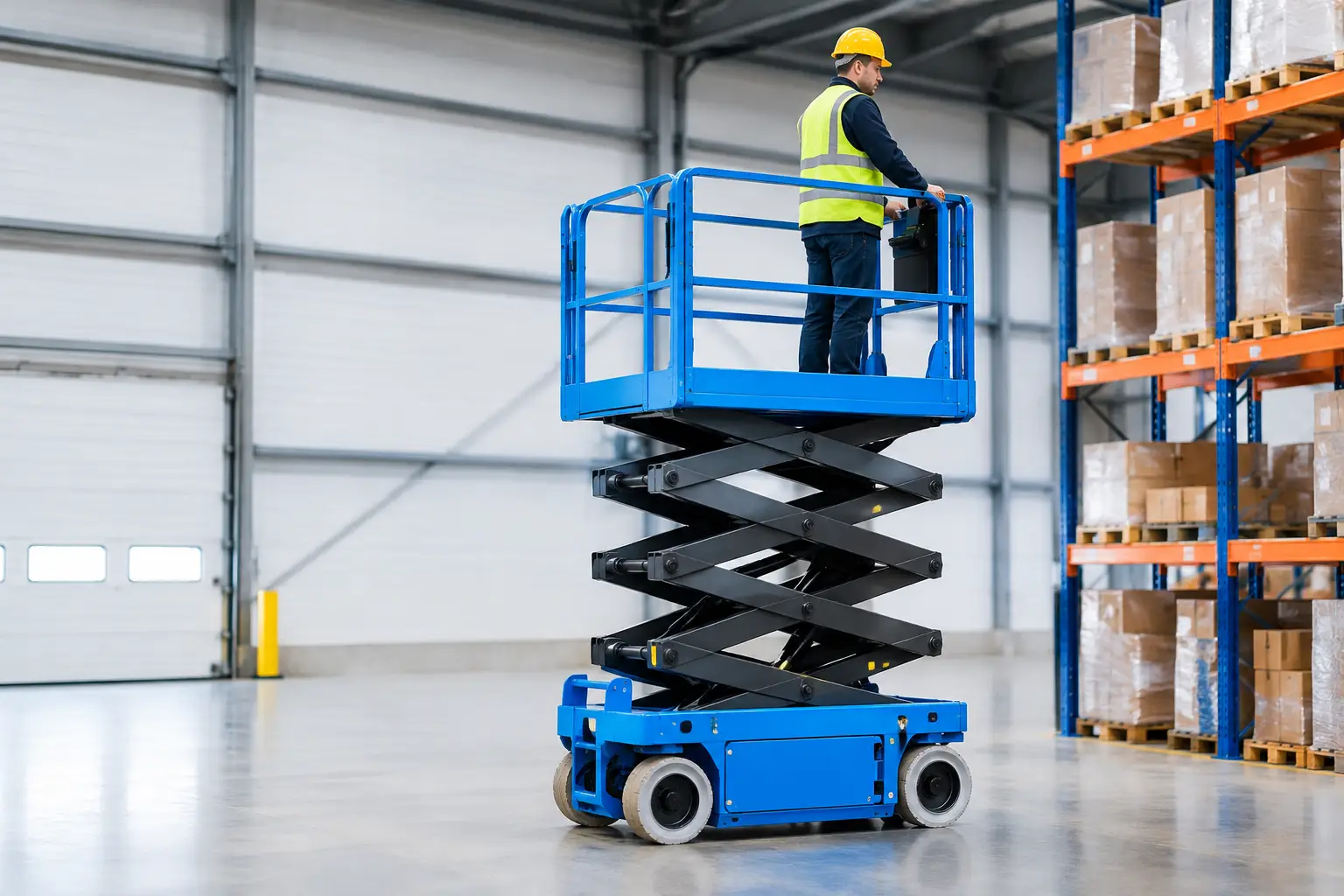
For routine internal work on level concrete floors, an electric scissor lift is often the most efficient choice. It provides vertical access with a stable platform, useful deck space and a familiar operating format for repeated maintenance tasks. Low-level and mid-height electric scissors are particularly effective for lighting, sprinkler checks, ceiling services, stocktaking and installation work along clear aisles.
Look closely at overall width, stowed height and platform extension rather than choosing by working height alone. A narrow machine can travel through tighter routes, but a platform extension may reduce the number of moves needed to cover a long section of services. If the lift must pass underneath a mezzanine, roller shutter or fixed gantry, stowed height becomes a non-negotiable measurement.
Scissor lifts have limits. They do not offer sideways reach, so they are less suitable where machinery, racking or a production line sits directly below the work. They also rely on a suitably level, firm surface. A small slope, damaged slab or drainage channel needs assessing before a machine is selected or deployed.
Vertical mast lifts for tight aisles and low floor loads
Vertical mast lifts are a strong option where available space is extremely limited and the work is light-duty. Their compact footprint and small turning circle make them useful in narrow aisles, stores, plant rooms and areas where a full scissor lift feels oversized. For one-person tasks such as inspection, minor repairs and access to controls or sensors, they can be a practical fit.
The trade-off is platform capacity and room to work. A mast lift may carry an operative and small tools comfortably but not bulky components, replacement ducting or multiple personnel. It is a sensible factory platform when the task is genuinely light and vertical, not a cheaper substitute for a machine that needs more deck space.
Compact articulated booms for working around obstacles
Where the work point sits beyond a conveyor, above fixed machinery or behind racking, a compact articulated boom lift can save considerable time. The machine can be positioned in an accessible lane, then use its up-and-over movement to place the basket where a scissor cannot reach.
For indoor use, electric articulated booms are usually the natural starting point. Check the machine’s tail swing, turning radius and basket rotation, especially in narrow production zones. A boom may have a compact chassis but still need clear space while turning or slewing. It is also worth checking whether the required outreach is available at the actual working height, rather than relying on maximum figures that apply only in a different boom position.
Tracked spider lifts for difficult access routes
A tracked spider lift earns its place when getting to the task is as difficult as doing the task. Narrow gates, uneven external approaches, steps, soft ground and restricted internal openings can rule out conventional self-propelled access equipment. With compact transport dimensions and stabiliser-based operation, a spider lift can reach locations that would otherwise need scaffolding or a more disruptive access plan.
This category needs careful site assessment in a factory setting. Stabiliser positions take up more space than the machine’s travel width, and the ground or floor must carry the resulting loads. Internal use also calls for the right power arrangement. Battery, mains-electric and hybrid options can suit different sites, while petrol or diesel operation requires appropriate ventilation and emissions control.
Spider lifts are not only for outdoor work. They can be a very capable answer for atriums, high-bay maintenance areas and buildings with awkward routes, provided that floor protection, loading and set-up space are properly planned.
Measurements to confirm before requesting a quotation
A few accurate measurements prevent expensive surprises. Record the narrowest width on the full route, not just the final doorway. Include turns, ramps, kerbs, shutter openings, lift thresholds and any points where a machine must pass between racking or fixed plant. Height restrictions should include low pipes, cable trays, fire doors and mezzanine structures.
Floor loading deserves the same attention. Ask for the machine weight, wheel loads or stabiliser reactions as applicable, then compare those figures with the building information available. Suspended slabs, service voids, loading bays and resin floors may need further advice or spreader boards. The heaviest machine is not always the wrong choice, but its loads must be understood rather than assumed.
Also establish the real working envelope. Measure the height of the task, the horizontal distance from the place the machine can stand, and the size of the work area required. Consider what must travel in the basket: tools, test equipment, materials and, where permitted, a second person. These details quickly show whether a mast, scissor, boom or spider lift is the right category.
Power, charging and the factory working day
An electric lift keeps emissions and noise down, but it must be able to complete the intended duty cycle. A machine used for occasional inspections has a different charging requirement from one travelling between departments throughout a full shift. Confirm battery condition on any pre-owned platform, charging time, charger type and where charging will happen without blocking emergency routes or traffic areas.
Non-marking tyres are usually preferable on finished factory floors, although they are not a cure for poor housekeeping. Loose strapping, pallet wrap, swarf and uneven joints can affect traction and create avoidable risks. Good route management is part of choosing a compact lift, not an afterthought for the operator.
If the platform will work indoors and outdoors, avoid trying to force one machine into every role. An electric compact lift may be ideal inside, while a stabilised rough-terrain boom or tracked platform handles the external service work. The combined purchase or a planned hire arrangement can be more productive than operating one compromised machine everywhere.
New or pre-owned: buy around condition and support
Pre-owned compact lifts can offer excellent value when specification, condition and remaining working life align with the work programme. The buying decision should account for battery performance, service history, inspection records, tyre or track condition, controls, hydraulics and the availability of parts. A lower purchase price loses its appeal if the machine is regularly out of action during planned shutdown work.
New equipment may be the stronger case where a specific width, power configuration or warranty requirement is central to operations. It can also make sense for high utilisation, where predictable ownership costs and current controls matter more than the initial outlay. Finance and part-exchange can help businesses replace an unsuitable platform without tying up all available capital.
Pure Platforms can help compare new and pre-owned options against access dimensions, working height, transport requirements and budget, including machines sourced beyond immediately available stock. A clear brief produces a quicker, more useful quotation than simply asking for the smallest lift available.
Plan the work as well as the machine
Every compact platform still needs a proper safe system of work. Confirm operator familiarisation, pre-use checks, pedestrian segregation, overhead hazards, floor conditions and rescue arrangements before the lift enters the area. For indoor tasks near live production, agree access windows with the site team so that the platform is not competing with forklifts, pallet movements or people on foot.
The best result is often a machine that feels almost unremarkable once it is on site: it passes through the route, reaches the job, carries what is needed and returns to charge ready for the next shift. That is the kind of fit worth specifying carefully.